
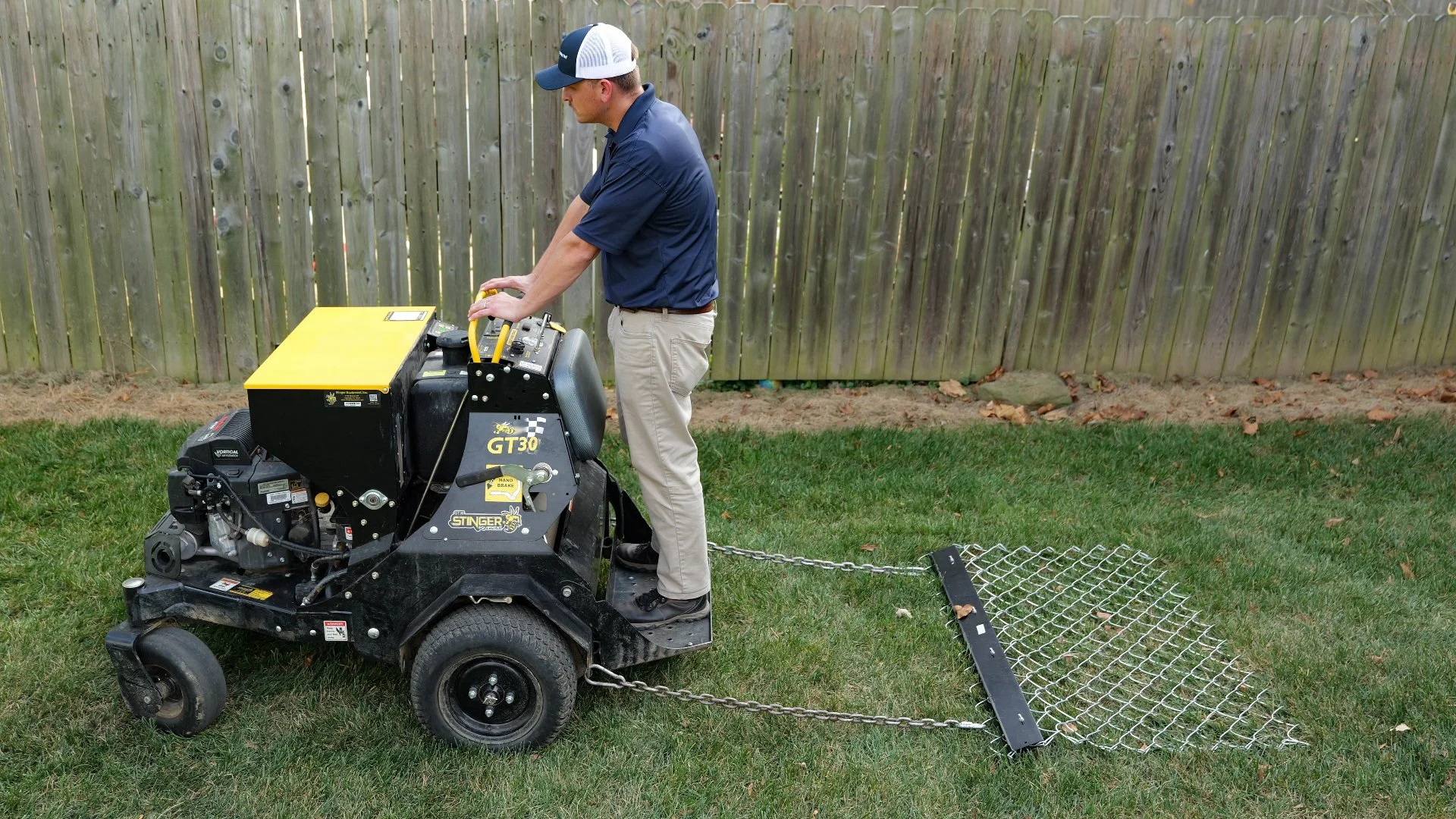

Core aeration is a lawn care process that involves removing small plugs of soil from your turf to alleviate compaction and improve air and water circulation. It's highly beneficial for lawns in Delaware and Pennsylvania, but understanding both the benefits and drawbacks ensures you go into the service knowing exactly what to expect.
While core aeration can be invasive, it's highly effective at loosening compacted soil, creating passageways for nutrients and resources to reach the roots of your grass, and breaking up the thatch layer. It also has to be done at the right time to avoid stressing it out and allow it to recover quickly. Additionally, it leaves behind soil cores, which can be unappealing, but they return essential nutrients and can be broken up to make them less of an eyesore.
What is core aeration?
Core aeration is a vital lawn care service that involves mechanically pulling up hundreds of soil cores from your turf using an aerator. Depending on your lawn's needs, professionals may pass over it once or twice. The soil plugs are typically 2-3 inches long, and removing them leaves small holes across your turf. The purpose of aeration is to address compaction by breaking up hard, packed soil particles. As a result, it improves the flow of nutrients and resources to the roots, leading to a healthier, more resilient lawn!
What are the pros and cons of core aeration?
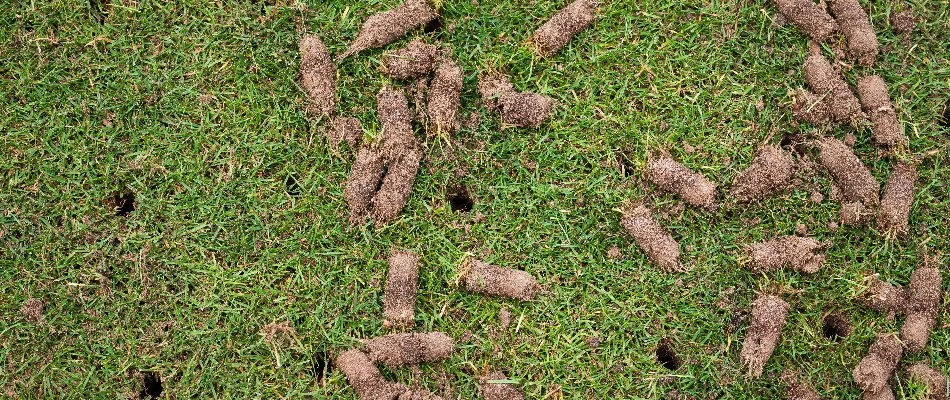
Understanding the impact of core aeration on your lawn is important. While there are some drawbacks, the benefits vastly outweigh any temporary stress. To start, the mechanical process of removing soil cores can be invasive for your lawn. However, it's highly effective at loosening compacted soil, creating passageways for nutrients, sunlight, water, and oxygen to reach the roots of your grass more easily, where they're needed most. Not only that, but it also breaks up the thatch layer, which consists of dead grass, roots, and other plant material that can become too thick, suffocating your lawn and blocking essential resources. Removing these soil plugs allows it to breathe and absorb nutrients more efficiently.
Another drawback is that core aeration has to be performed at the right time; otherwise, you risk stressing your grass. For lawns in Delaware and Pennsylvania, the fall season is ideal. Fall offers optimal temperatures and soil conditions, and it'll be strong enough to endure the process. That way, it can heal quickly and seamlessly transition into winter dormancy.
When you aerate your turf, soil cores will be left behind. Some property owners don't find these soil cores very appealing. However, they will eventually decompose and return nutrients to the soil. If you don't like the way they look, you can break them up with a rake or go over them with a lawn mower. Not only does this speed up the decomposition process, meaning your grass can still benefit from the recycled nutrients, but it also makes them less conspicuous!
Help your lawn reach its full potential with our core aeration service! Call us to sign up.
If you want to help your lawn reach its full potential, you've come to the right place! Our core aeration service at Delaware Valley Turf is just what you need to alleviate soil compaction and make it easier for nutrients and other resources to reach the roots of your grass. We'll pass over your turf once or twice, depending on its needs, and drag a harrow rake to break up the soil cores. This service is available in the fall to ensure it's strong enough to endure the process, which pairs great with overseeding to make it denser and thicker!
Our core aeration service is available in Newark, DE, Doylestown, Blue Bell, PA, and throughout the surrounding areas. Give us a call today at (610) 328-4170 to schedule!

Comments (0)
Thanks for your comment!
Thanks for your feedback! Your comments have been successfully submitted! Please note, all comments require admin approval prior to display.
Error submitting comment!
There is a problem with your comment, please see below and try again.