
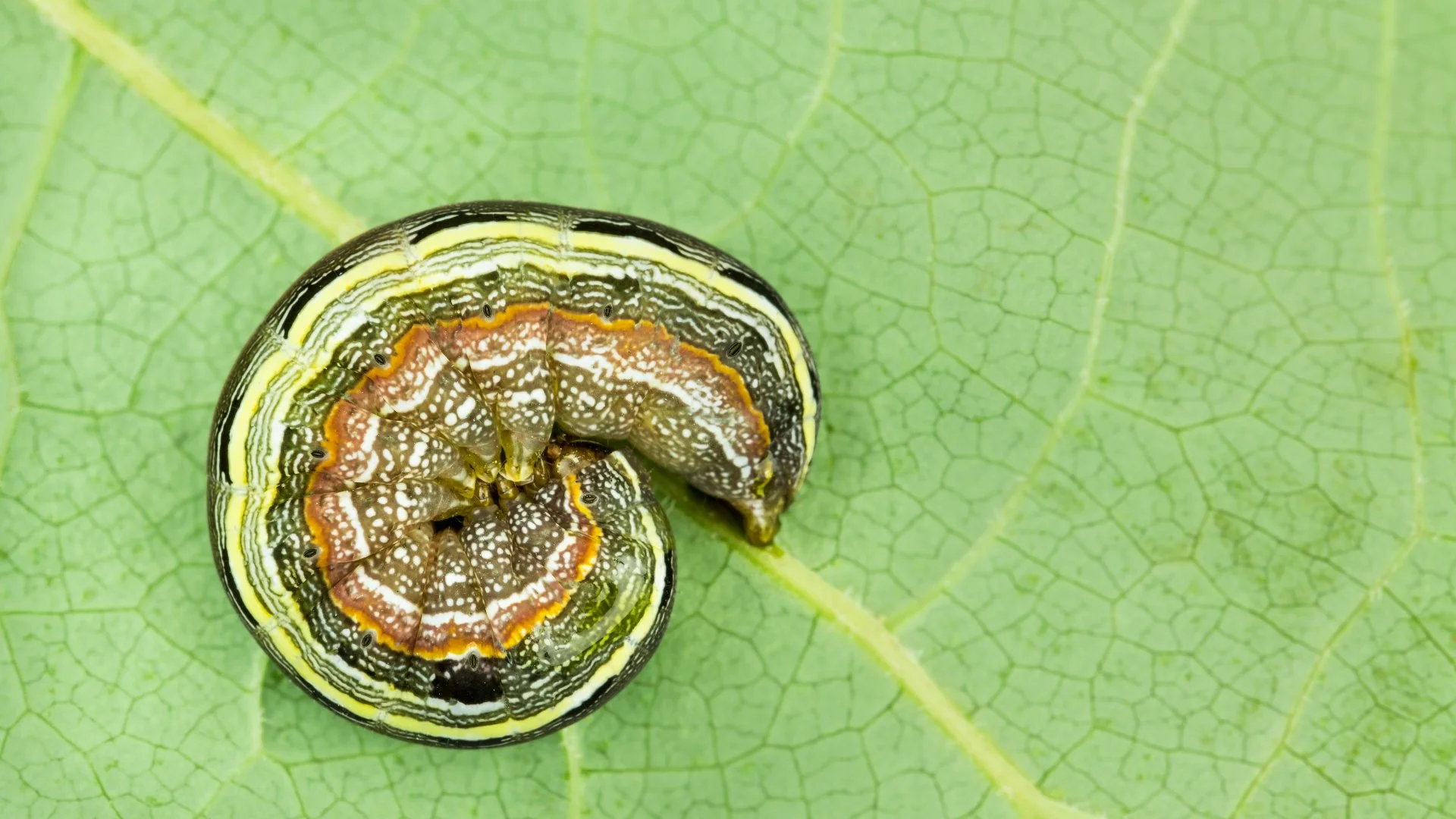

Grubs, chinch bugs, cutworms, sod webworms, and armyworms are common lawn pests in Pennsylvania. Grubs damage roots, creating brown patches, while chinch bugs suck plant juices and inject toxins, turning grass yellow. Cutworms are nocturnal, cutting grass blades at the soil surface. Sod webworms reside in silk-lined tunnels, leaving ragged patches, especially noticeable after mowing. Armyworms, known for their rapid movement across landscapes, devour grass blades quickly. Each pest has a distinct lifecycle and impact, making early detection and preventative measures crucial to maintaining healthy, green lawns.
Grubs damage the roots of lawns in Pennsylvania.
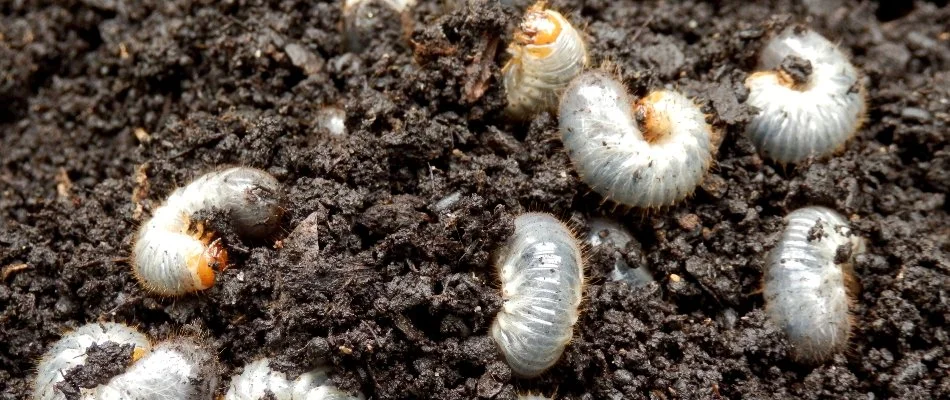
Grubs are one of the most notorious lawn pests in Pennsylvania, especially common during the late summer and early fall. Grubs are white, C-shaped larvae of beetles like Japanese beetles and June bugs. Typically found just below the soil surface, they grow up to an inch long. Grubs primarily feed on the roots of grass, leading to irregular brown patches and spongy areas underfoot. This damage can lead to further stress and susceptibility to drought. Besides harming grass, grubs attract animals like raccoons and birds, which dig up lawns in search of an easy meal.
Chinch bugs suck fluids from your grass and inject a toxin into it.
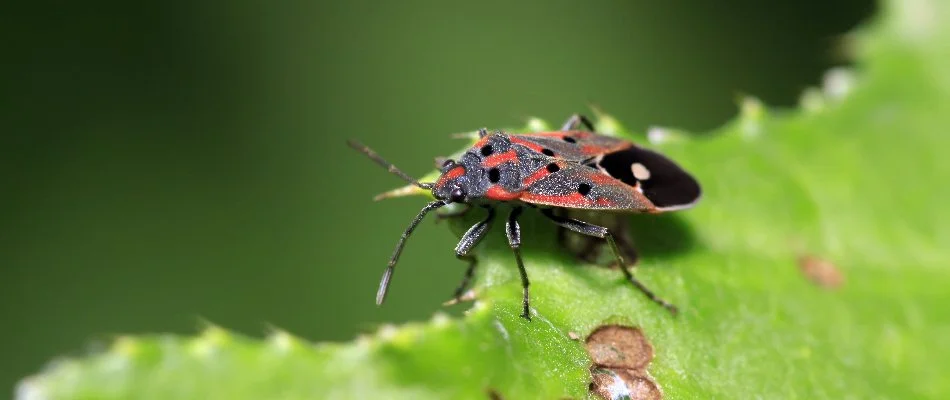
Chinch bugs are tiny insects, about 1/8 of an inch long, with black bodies and distinctive white wings marked with a black triangle. Despite their small size, they pack a punch in numbers. Living in thatch, chinch bugs thrive in hot, dry weather and feed by sucking plant juices while injecting toxins that cause your grass in Pennsylvania to turn yellow and die.
Their life cycle involves laying eggs in spring, which hatch into nymphs. These nymphs mature quickly and produce several generations throughout the summer, making early detection critical for control. Damage from chinch bugs might first appear as sunlit spots that gradually spread into larger patches. If unchecked, their activity can make sections of the lawn look scorched.
Cutworms are nocturnal pests that cut through grass blades.
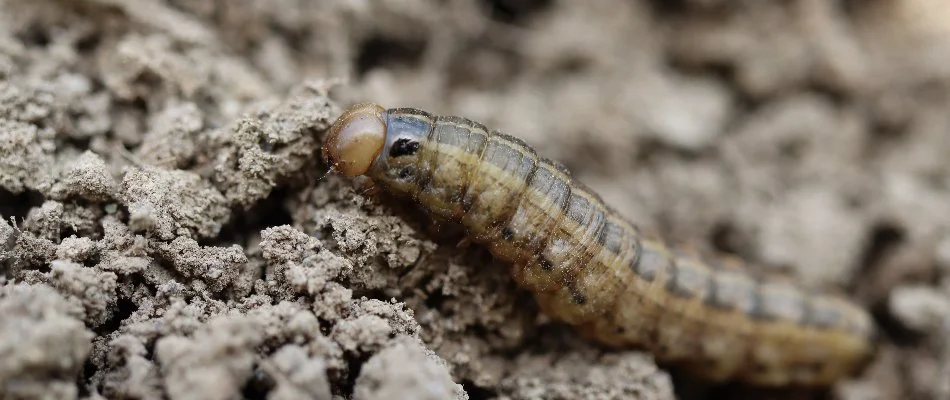
Cutworms are caterpillar-like pests that are especially problematic in the spring and fall. These pests are nocturnal, feeding on grass stems and leaves during the night. They cut through blades at the soil surface, leaving small, circular patches of dead grass. The cutworm life cycle begins when adult moths lay clusters of eggs on leaves or soil. Once hatched, the larvae start to feed, pupating in the soil after a few weeks and emerging as moths, ready to repeat the cycle.
Signs of cutworm damage include grass that appears to be clipped at the ground level. You might also notice birds pecking at your lawn more frequently, a sign that cutworms are present. Regular mowing and removing lawn debris can minimize their habitat, while specific insecticidal treatments may be needed for larger infestations.
Sod webworms cause ragged patches on the grass blades.
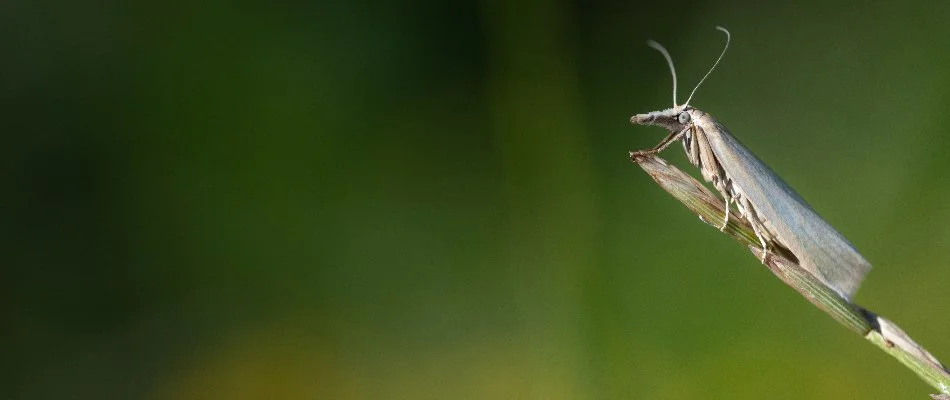
Sod webworms are larvae from small, buff-colored moths. The caterpillars are approximately 3/4 inch long, greenish or brown with dark spots. During the summer, they reside in silk-lined tunnels in the soil and emerge at night to feast on grass blades. Their feeding results in ragged patches, and the lawn may look as though it has been sliced by a sharp instrument. The damage caused by sod webworms is more noticeable after mowing, as the uneven grass can highlight affected areas.
Armyworms cause extensive damage to lawns in a short period.
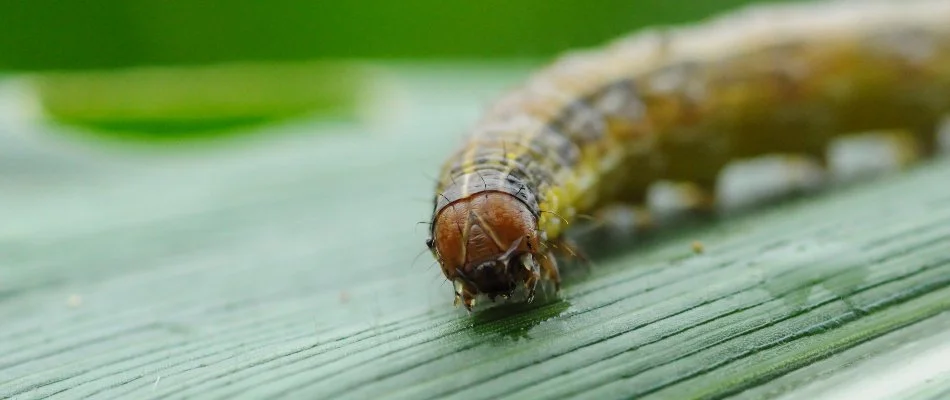
Armyworms are aptly named for their tendency to march across landscapes in large numbers, consuming almost anything in their path. These pests are striped caterpillars that grow up to 1.5 inches long, with a distinctive pale line down their sides bordered by darker stripes. Preferring lush, well-fertilized lawns, armyworms can create significant damage in a short period, devouring grass blades completely. Lawns in Pennsylvania that are infested with armyworms will have patches of affected grass that seem to appear suddenly.
Protect your lawn in Pennsylvania from pests. Call us today to sign up for our lawn insect control services!
Understanding the common lawn pests in Pennsylvania is crucial for maintaining a healthy lawn. Fortunately, we are ready to help protect your grass from them! Here at Delaware Valley Turf, we offer lawn insect control services that feature regularly scheduled treatments on your lawn to ensure overlapping coverage against harmful pests. These services include sod webworm control, armyworm control, chinch bug control, cutworm control, and grub control services to keep your grass healthy and strong. We offer these services to properties in Newark, DE, Doylestown, Blue Bell, and surrounding areas in Pennsylvania. Call us at (610) 328-4170 to sign up!

Comments (0)
Thanks for your comment!
Thanks for your feedback! Your comments have been successfully submitted! Please note, all comments require admin approval prior to display.
Error submitting comment!
There is a problem with your comment, please see below and try again.